


**Outline: How to Set Meta Descriptions in WordPress for Better SEO**
Set a unique meta description for each page in WordPress to boost website visibility and SEO optimization. Use relevant information about your content so search engines and users know what to expect from your site.
Include focus keywords naturally to improve on-page SEO, user engagement, and clickthrough rate in search engine results.
Install an SEO plugin like Yoast SEO or Rank Math for easy editing of meta tags without coding skills. Write clear, conversational taglines that highlight user benefits first; this helps attract more web traffic from digital marketing campaigns.
A well-written snippet includes the most important details at the start to catch attention quickly in search results. Meta descriptions support overall keyword strategy but work best as part of broader content management efforts across your blog or website.
**Introduction to Meta Descriptions and Their SEO Importance**
Writing effective meta descriptions can be a challenge for many bloggers. Did you know that these short snippets can significantly affect your click-through rates and overall SEO? In this blog post, we’ll guide you on how to set up CMS meta description settings WordPress SEO in a way that boosts your site’s visibility. Get ready to improve your search results and attract more visitors!
Key Takeaways
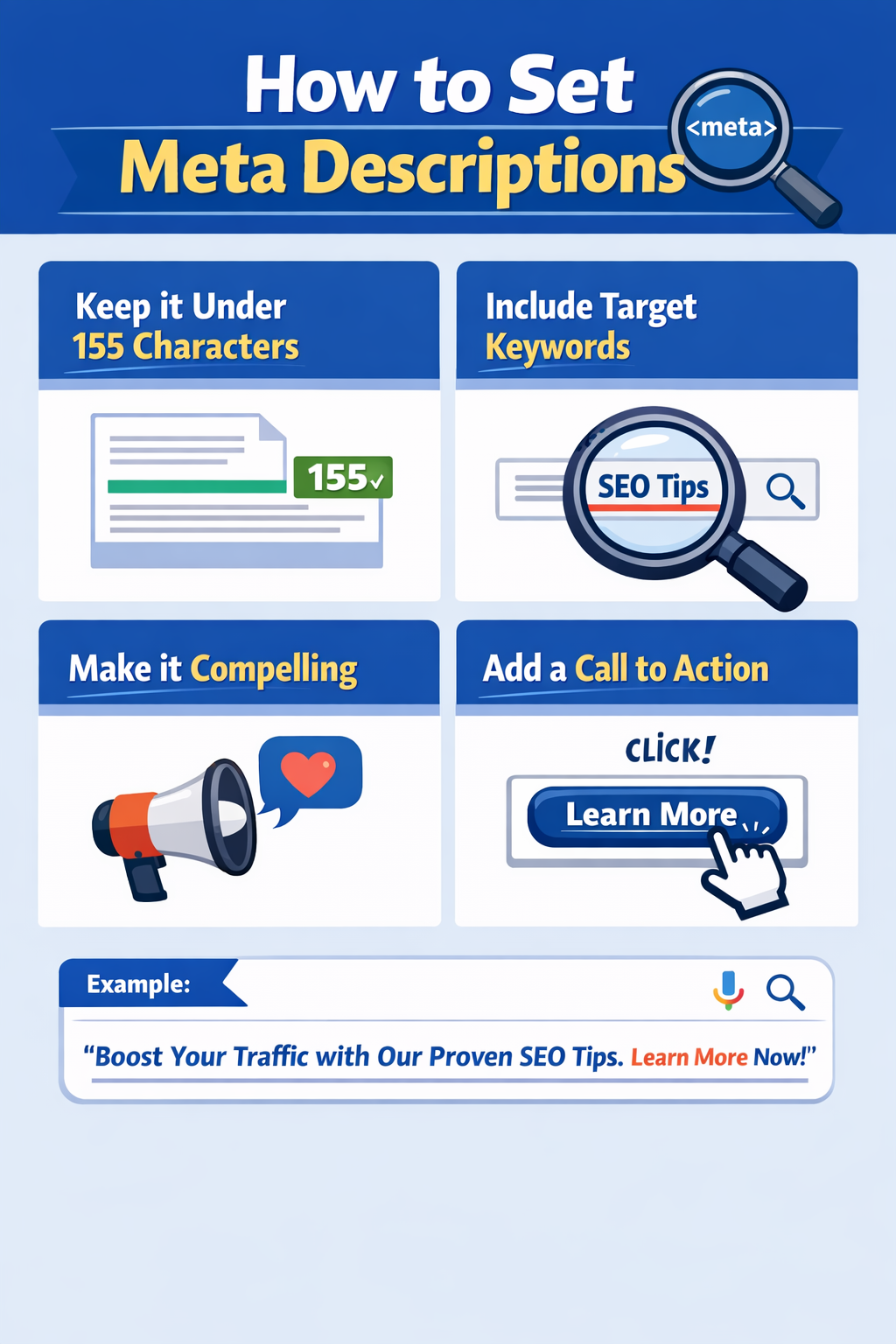
- Meta descriptions are short summaries (150–160 characters) that show below your page title in search results. Unique, well-written descriptions boost SEO and improve click-through rates from Google.
- Use focus keywords naturally and place important information at the start of each meta description to capture user attention quickly. Tools like Yoast SEO or Rank Math make this easy without coding skills.
- Avoid duplicate meta descriptions across your WordPress site; duplicated tags can hurt rankings and traffic, according to digital marketing experts.
- Regularly audit and update your meta descriptions using plugins or built-in tools to fix missing or outdated details. Preview them for both search engines and social sharing platforms.
- Write clear calls-to-action (“Learn more,” “Get started today”) that match user intent. Aligning with voice search trends and keeping plugin updates current helps maintain strong SEO performance over time.
Brief overview of meta descriptions
Meta descriptions are short taglines or snippets that appear under your page title and URL in search results. They give users a quick summary of what your content offers, making them important for both SEO and user experience.
Google displays the meta description to help users decide if they should click through to your website. “The first 150-160 characters often make the biggest impact on clicks,” according to digital marketing experts.
Each page should have its own unique meta tags and descriptions to avoid duplication, which can hurt optimization efforts. Well-written descriptions improve click-through rates, driving more website traffic from search results.
Meta descriptions work with focus keywords and match user intent for better onpage SEO performance in WordPress sites; plugins like Yoast SEO streamline this process by letting you add these details without coding skills.
Why meta descriptions matter for WordPress SEO and click-through rates
Crafting unique meta descriptions for each page on your site boosts SEO effectiveness. Duplicating these descriptions can harm your search engine ranking. Always include relevant information that accurately reflects the content users will find.
This practice leads to a better user experience and encourages clicks.
Writing compelling meta descriptions significantly improves click-through rates. Positioning essential information at the beginning captures user attention quickly in search results.
Focus on user benefits rather than merely listing features. A well-written meta description can drive more traffic to your site, enhancing visibility and engagement in digital marketing efforts.
**Best Practices for Writing Effective Meta Descriptions**
Keep your meta descriptions short and straight to the point. Use keywords naturally, making each description unique to boost engagement and clicks.
Keeping descriptions concise (recommended length)
Meta descriptions should stay concise. Aim for 150 to 160 characters. This length allows you to convey essential information without cutting off in search results. Place the most important details at the beginning of the description.
Unique content matters too; avoid duplicate meta descriptions across pages for better SEO effectiveness. Focus on user benefits rather than just listing features, making your writing more engaging.
Crafting action-oriented and relevant messages helps capture attention quickly. A well-written meta description increases clicks and enhances search visibility, ultimately driving more traffic to your site.
Use an SEO plugin for easy integration into WordPress, which eliminates coding hassles while improving user experience through optimized taglines and keywords.
Using focus keywords naturally
Focus keywords enhance your meta descriptions. Use them in a way that feels natural, not forced. Place the most important information at the beginning of the description to grab attention quickly.
Keywords should relate closely to what users will find on your page. Highlight benefits instead of just listing features or details.
Writing with an engaging tone also helps. Speak directly to readers and connect with their needs. This approach increases clicks from search results and improves overall SEO effectiveness.
Start applying these tips before moving on to methods for adding or editing meta descriptions in WordPress.
Making meta descriptions unique for each page
Creating unique meta descriptions for each page boosts SEO effectiveness. Meta descriptions should reflect the specific content of that page. This representative approach helps users know what to expect, enhancing their experience.
Avoid duplication across your site, as repeated descriptions can harm search performance.
User benefits must take priority in these descriptions. Highlight how your content meets user needs instead of merely listing features. Position key information at the beginning to grab attention quickly.
Well-crafted meta descriptions increase click-through rates and improve website traffic significantly, making them a vital part of your keyword strategy and digital marketing efforts in WordPress.
Writing actionable, relevant, and compelling content
Craft meta descriptions that grab attention. Start with the most important information to captivate users in search results. Focus on user benefits rather than merely listing features or content details.
Engage readers by using a conversational tone and relevant keywords naturally throughout your descriptions.
Ensure each page has a unique meta description to boost SEO effectiveness. Incorporate specific information about the page’s content so that users find exactly what they’re looking for.
A well-crafted meta description increases clicks, enhancing overall website traffic and visibility while reinforcing your keyword strategy in digital marketing efforts.
Including a call-to-action and matching search intent
Writing actionable, relevant, and compelling content sets the stage for effective meta descriptions. A strong call-to-action draws readers in and encourages them to click on your link.
Use phrases like “Learn more” or “Get started today” to inspire users.
Align your meta descriptions with user search intent for better results. Focus on what users want when they search online. Highlight benefits instead of just listing features. Place the most important information at the beginning to catch attention quickly in search results.
Well-crafted meta descriptions help improve SEO performance and boost click-through rates significantly, leading to increased website traffic and visibility.
**Ways to Add or Edit Meta Descriptions in WordPress**
You can use popular SEO plugins like Yoast SEO or Rank Math to easily add or edit your meta descriptions. If you prefer, you can also update them manually in the page or post editor for more control over your content.
Using popular SEO plugins (e.g., Yoast SEO, Rank Math, All in One SEO)
SEO plugins like Yoast SEO, Rank Math, and All in One SEO offer an easy way to add meta descriptions in WordPress. These tools allow you to create unique descriptions for each page without needing any coding knowledge.
By using these plugins, you can simply fill in the fields provided. This process ensures that your meta descriptions are clear and relevant.
Many of these plugins generate meta descriptions automatically based on content or provide suggestions for improvement. Effective use of these features leads to better optimization and helps improve click-through rates from search results.
As a result, successful implementation enhances user experience while driving traffic to your site effectively. Moving forward, explore how to manually update meta descriptions in the page or post editor for more control over your SEO efforts.
Manually updating meta descriptions in page/post editor
Manually updating meta descriptions in the page or post editor allows you to customize each entry for better SEO. Open your WordPress dashboard, then navigate to Posts or Pages. Locate the content you want to edit.
Scroll down until you find the meta description field, often provided by an SEO plugin.
Insert a unique description that reflects your page content accurately. Focus on user benefits and include relevant keywords for optimization. Ensure your most important information appears first; this helps capture attention in search results.
Engaging and conversational tones can encourage clicks effectively, driving more traffic to your site.
Automatically generating meta descriptions with AI or plugin features
Automatically generating meta descriptions speeds up the optimization process for multiple pages in WordPress. Many SEO plugins, like Yoast SEO and Rank Math, offer features to programmatically create these descriptions.
These tools analyze your content and suggest relevant snippets that can enhance visibility in search results. Effective automation helps maintain unique descriptions across your site, avoiding duplication that could hurt SEO.
Using an AI tool or plugin makes writing more straightforward. Well-crafted meta descriptions boost click-through rates by providing potential visitors with concise information about your content.
They play a crucial role in driving traffic to your blog or website while ensuring users find what they seek quickly and easily. Next, explore ways to optimize and manage meta descriptions across your site effectively.
**Optimizing and Managing Meta Descriptions Across Your Site**
Regularly check for any missing or duplicate meta descriptions across your site. Use SEO tools to preview how each description appears in search results and social media shares.
How to identify missing or duplicate meta descriptions
Missing or duplicate meta descriptions can hurt your site’s SEO. To find these issues, start by checking each page’s metadata in WordPress. Use SEO plugins like Yoast SEO or Rank Math to streamline this process.
These tools often provide insights on missing or duplicated elements.
Look for unique descriptions on every page; this practice enhances your keyword strategy and boosts click-through rates. Include relevant information about the content in each description to draw users’ attention.
Regularly auditing your existing meta descriptions helps maintain optimization across your site, ensuring a better user experience while preventing duplication problems. Next, focus on regularly updating and optimizing these meta descriptions for continued effectiveness in search results.
Regularly auditing and updating existing meta descriptions
Regular audits of meta descriptions help you catch missing or duplicate entries on your WordPress site. Unique descriptions for each page boost SEO effectiveness, impacting click-through rates significantly.
This practice not only improves user experience but also enhances search results visibility.
Updating meta descriptions allows you to align with current content and user intent. Positioning the most valuable information first captures attention and drives more clicks. An SEO plugin simplifies this process, offering an easy way to manage updates without coding knowledge.
Monitoring performance ensures that your keyword strategy adapts to changing trends in digital marketing.
Leveraging tools for previewing meta descriptions
Tools for previewing meta descriptions can greatly simplify your SEO efforts. Many SEO plugins, such as Yoast SEO and Rank Math, provide this feature directly in the WordPress editor.
You can see how your meta description will appear in search results instantly. This instant feedback helps you create compelling content that attracts clicks.
Automating meta descriptions across multiple pages streamlines your workflow. Programmatic generation allows you to maintain consistency without manual effort for each page. Keep essential information at the beginning of these descriptions to capture users’ attention quickly.
By ensuring user benefits are clear, you enhance engagement and encourage visitors to click through from search results.
Ensuring meta descriptions are optimized for social sharing
Meta descriptions should appeal to users on social platforms. Include relevant information about the page content to attract clicks. Position the most important details first, as this captures user attention quickly.
Framing meta descriptions in terms of user benefits provides a compelling reason for sharing. Engaging language encourages interactions and increases visibility across social networks.
Auditing your existing meta descriptions ensures they remain effective for both SEO and social sharing strategies. Advanced tips like aligning them with emotional triggers can further enhance engagement levels among users.
**Advanced Tips to Boost SEO with Meta Descriptions**
To improve your click-through rates, match your meta descriptions with user search intent and emotional triggers. Monitor the performance of these descriptions regularly to adjust them for better SEO outcomes.
Aligning meta descriptions with user search intent and emotional triggers
Align meta descriptions with user search intent to increase click-through rates. Focus on addressing the needs and desires of your target audience. Craft compelling descriptions that emphasize user benefits rather than just features.
Position important information at the beginning of each description to capture attention quickly.
Use a conversational tone to make your content engaging and relatable. Highlight emotional triggers like curiosity or urgency, which can motivate users to click through your site in search results.
Stay aware of current SEO trends as they evolve; adapting your strategy will help maintain visibility in digital marketing efforts.
Monitoring performance and adjusting for higher click-through rates
Monitoring performance helps you understand how well your meta descriptions work. Analyze click-through rates on search results to see which descriptions attract users. Adjustments can lead to higher traffic and improved visibility for your site.
Use tools that track performance metrics effectively. Regularly update meta descriptions based on data insights. Focus on user benefits, making the most crucial information stand out first.
A compelling description boosts engagement and encourages more clicks from potential visitors.
Keeping voice search and featured snippets in mind
Optimize meta descriptions for voice search and featured snippets. Voice search often uses natural language, so write in a conversational tone. Incorporate relevant keywords within the first few words to capture user attention quickly.
Focus on user benefits rather than just listing features; this approach boosts engagement and click-through rates. For featured snippets, provide clear answers to common questions related to your content.
Make sure each page has unique meta descriptions that accurately represent the content and match user intent effectively.
Staying up-to-date with SEO trends and plugin updates
Keeping voice search and featured snippets in mind shapes your approach to SEO. Staying current with SEO trends and plugin updates ensures that your website remains competitive. Meta descriptions require fresh strategies as user behavior changes.
New techniques can help improve click-through rates.
SEO plugins regularly update their features, making it easier for you to optimize meta tags effectively. Using an SEO plugin is the simplest way to add unique meta descriptions without coding knowledge.
These tools also automate the generation of these descriptions across multiple pages, saving time while enhancing your keyword strategy.
Regular audits of existing meta descriptions help identify those that are missing or duplicated. You must ensure each page’s description accurately reflects its content; this leads to better user experience (UX).
Unique, compelling content encourages visitors to click on search results, boosting traffic and visibility for your site.
FAQs
1. What are meta tags, and why do they matter for SEO in WordPress?
Meta tags provide search engines with a summary of your page. They help improve search results by showing an optimized description to users.
2. How can I set a meta description using WordPress plugins?
Install a content management plugin that supports digital marketing needs. Use it to add or edit the description field on each post or page.
3. What is the best keyword strategy when writing a meta description?
Include important keywords related to your topic and tagline but keep sentences clear and relevant for better optimization.
4. How does an effective meta description impact user experience in search results?
A well-written meta tag draws attention in search listings; this increases clicks and improves overall user experience UX.
5. Why should content marketing focus on updating meta descriptions regularly?
Regularly updated descriptions reflect current content strategies; this helps maintain strong SEO performance within digital marketing campaigns.