


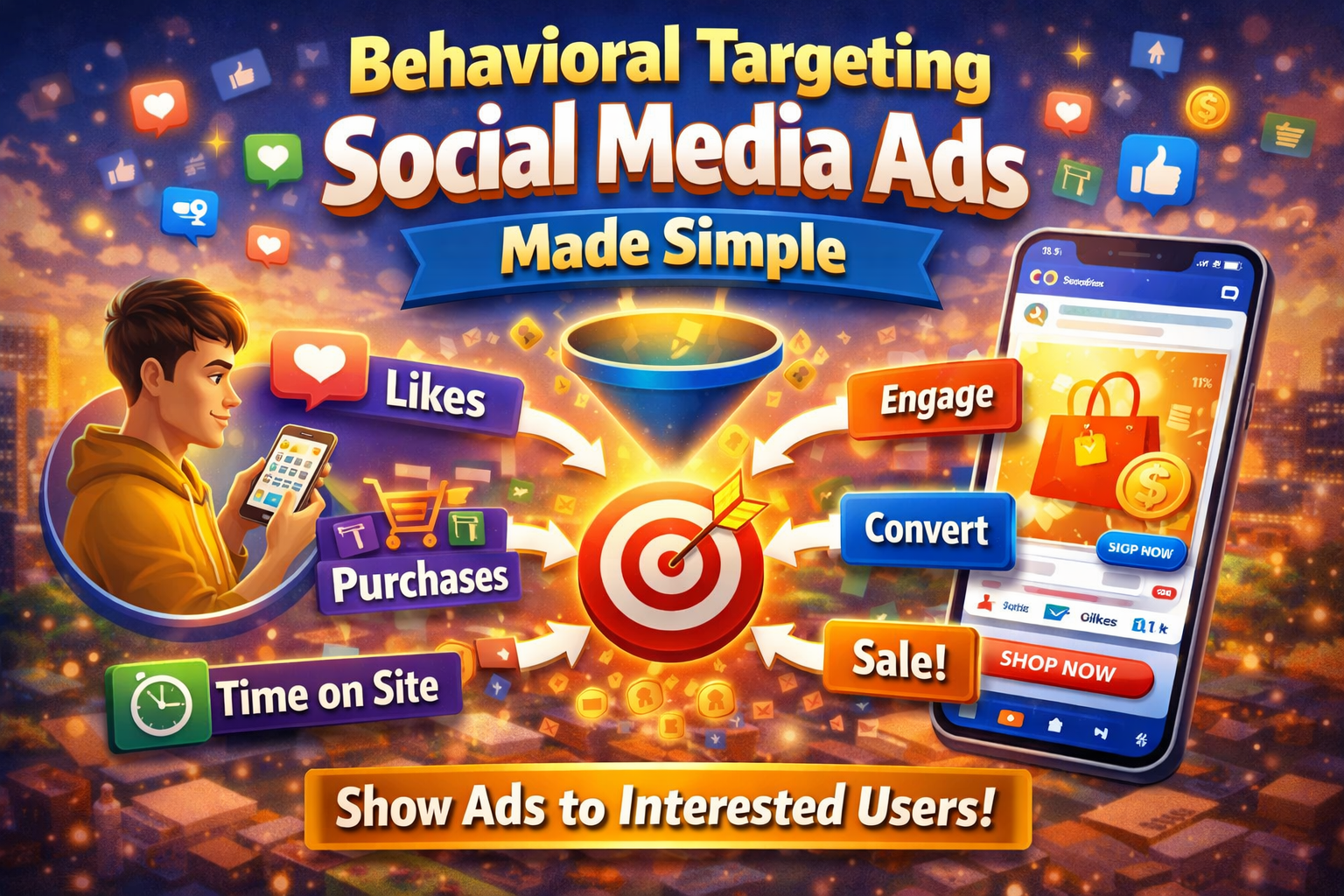
Struggling to get your social media ads in front of the right people? Behavioral Targeting Social Media Ads use audience segmentation and browsing history to show users content that matches their interests. 1 This post breaks down how behavioral targeting works, making it easy for you to improve ad performance and reach more customers. 2 Simple steps can boost your marketing success…
keep reading to see how! 3
Key Takeaways
• Behavioral targeting uses data like browsing history, purchase intent, and app use to show users relevant ads. Tools such as Meta Pixel, Google Analytics, and CDPs help collect this information.
• Marketers segment audiences based on actions or interests (ex: frequent shoppers or new parents). Personalization using tools like Adobe Target can increase conversion rates by up to 50%. [Facebook Ads]
• High engagement rates—such as a Facebook Pixel retargeting campaign yielding a 4.7% CTR—show that personalized ads match user behavior well. Campaigns often see better results with dynamic retargeting and location-based targeting.
• Respect for privacy is crucial; get clear user consent and follow laws like GDPR. Strong data security builds trust with customers. Use secure encryption methods according to privacy regulations (HIPAA for health).
• Testing campaigns through A/B testing improves ad performance over time. Success is measured by click-through rates (CTR), conversion rates, and engagement metrics tracked by tools like Google Analytics, Meta Ads Manager, and Statista projections ($982B U.S. online ad market by 2025).
What Is Behavioral Targeting in Social Media Ads?
Moving from the basics, digital marketers now use behavioral targeting in social media ads to reach people more effectively. 1 This strategy tracks and studies user actions like browsing history, purchase behavior, page likes on Facebook or Instagram, and even app interactions.
Big platforms such as Meta Pixel and Google Ads collect this behavioral data using first-party data tools or third-party solutions like Lotame Data Exchange.
Behavioral segmentation happens once enough information is gathered. Marketers separate users into audience segments based on shared interests or habits; for example, those who clicked display ads for shoes get grouped together.
Personalized advertising follows next; shoppers see dynamic ads showing products that match their intent or recent searches—think product recommendations after viewing a retail site.
Unlike contextual targeting which relies on page content, behavioral advertising focuses on the customer journey and past engagement patterns across channels including video and programmatic placements within social media advertising campaigns.
This approach delivers timely messages that improve conversion rates and click-through rates (CTR), helping brands connect with the right customers at the perfect moment while supporting privacy by design principles set by data management platforms like Piwik PRO or Adobe Experience Cloud Team members including Alexandra Theriault.
https://www.youtube.com/watch?v=AxBIX4MZysk
How Behavioral Targeting Works
Behavioral targeting in social media advertising uses data from user actions to show more relevant display ads and personalized content. Brands use tools like Google Analytics, customer data platforms (CDPs), and machine learning algorithms to predict purchase intent and improve campaign results.
https://www.youtube.com/watch?v=iGRofrkmI2Y
Data collection
Data collection is the first step in behavioral targeting. It gathers important information about user behavior.
- Cookies are small files stored in a user’s browser. They track online actions and preferences.
- Pixels help collect data by loading invisible images on web pages. This process allows brands to monitor user visits. 2
- First-party data comes directly from users. It includes information they share, like email addresses or preferences.
- Browsing history shows what users search for and view online. This helps in understanding their interests.
- Purchase intent refers to signals that indicate someone is ready to buy something soon.
- Content engagement tracks how users interact with posts, videos, or ads on social media platforms. 3
- Demographic data gives insights into age, gender, and location of users; this shapes targeted strategies.
- App usage data reveals how often and why users engage with mobile applications, aiding effective targeting.
- Tracking technologies like flash cookies and device fingerprints enhance the accuracy of collected data.
These practices lay a strong foundation for effective behavioral marketing and advertising strategies in digital spaces, driving customer engagement and conversion rates higher than ever before!
Behavioral segmentation
Data collection leads into behavioral segmentation. This method groups users based on their actions and interests. It helps marketers target audiences more precisely. - Audience segmentation is essential for effective marketing. It identifies users with shared behaviors, interests, or purchase intent. Examples include frequent shoppers or eco-friendly buyers.
- Segmenting can follow lifestyle choices and life events. Knowing how customers live can shape marketing messages to fit their needs better.
- Buying patterns play a critical role in segmentation. Analyzing past purchases helps predict future behavior, allowing businesses to anticipate what customers will want next.
- Criteo Behavioral Audiences shows how to segment effectively. It targets people based on lifestyle choices and buying habits, like luxury shoppers or new parents.
- Pinpointing shoppers during key moments matters greatly in this field. For instance, targeting holiday shoppers or back-to-school families helps optimize efforts.
- Accessing lookalike audiences expands reach significantly. Finding similar users lets marketers connect with new potential buyers who share behaviors with existing customers.
- Focusing on your top 20% of customers is wise too; they often generate about 80% of sales.
- Behavioral segmentation leads to better-targeted campaigns that resonate more with specific audiences, enhancing customer engagement and retention.
- The precise targeting achieved through this method builds sustainable marketing strategies over time, benefiting long-term business goals and results.
- Understanding behavioral data allows for better eCommerce personalization, making the shopping experience smoother for customers while boosting chances of higher conversion rates through effective ads.
Ad targeting and delivery
Ad targeting and delivery is key to effective behavioral marketing. Properly targeting ads can improve customer engagement and boost conversion rates. - Advertisers collect first-party data from users. This includes browsing history, purchase behavior, and interactions on websites or apps.
- Data helps marketers create custom audiences for their campaigns. They identify user segments based on interests and behaviors. 2
- Algorithms then evaluate the user data to determine optimal ad delivery times. These algorithms help decide when to show ads for maximum impact.
- Predictive bidding comes into play here too. It uses predicted user value to place bids that increase visibility in social media advertising.
- Dynamic retargeting shows ads to users who previously interacted with products. This method applies the Rule of Seven principle, reminding users multiple times about products.
- Location-based targeting enhances the relevance of ads delivered through geo-fencing techniques. Ads reach consumers precisely at the point of sale or nearby locations.
- Campaign engagement analysis tracks how users interact with ads over time, helping marketers adjust their strategies based on metrics like click-through rates (CTR).
- Personalization is central to successful ad targeting; customized ads resonate better with specific audience segments, often leading to higher conversion rates.
- It’s essential to maintain transparency about how customer data is used in these campaigns; this builds confidence and addresses privacy concerns among users.
- Finally, continuous testing improves campaign performance; adapting strategies based on real-time feedback makes them more effective over time.
Effective ad targeting isn’t just a skill; it’s an essential strategy for thriving in today’s digital marketing environment!
Personalization and optimization
Personalization enhances marketing relevance. It leads to higher customer engagement and better conversion rates. Here are key points about personalization and optimization in behavior targeting for social media ads: - AI-driven segmentation helps brands understand their audience better. This means analyzing first-party data to identify different customer groups. 5
- Machine learning improves predictive behavioral targeting. It predicts what users might want based on their actions online.
- Tools like Adobe Target and Criteo’s Commerce AI allow marketers to test campaigns effectively. They help customize experiences for each user based on browsing history and purchase intent.
- Campaigns must be continuously optimized for success. Regular testing allows for adjustments that improve engagement levels.
- Adaptive creative formats, such as videos or rich media, enhance ad delivery across platforms. These formats capture attention better than standard display ads.
- Personalization creates value for customers and brands alike, making ads more relevant to individual users.
- 76% of consumers prefer brands that personalize their marketing efforts, showing it’s a consumer expectation. 6
- Hyper-personalized ads deliver precise messages based on online activities, leading to higher click-through rates (CTR) and improved return on ad spend (ROAS).
- Successful campaigns prioritize the needs of customers while ensuring transparency about data use to address privacy concerns effectively.
- A focus on relevance ensures that advertisements resonate with the target audience, increasing performance and customer retention rates in marketing efforts.
Types of Behavioral Targeting
Behavioral targeting uses different methods to reach the right audience. It tracks web and app actions, purchase history, and even where users are located to serve ads that fit their interests.
Each method helps create a better online shopping experience. This means more relevant ads for users and higher success for advertisers.
https://www.youtube.com/watch?v=qXc1QH-l3xw
Website and mobile app interactions
Website and mobile app interactions are crucial for behavioral targeting. This process tracks how users engage with online content. It looks at click paths, banner clicks, and scrolling behavior to understand user actions.
Data collection from social media engagement also plays a key role in this.
The information gathered helps shape personalized ads based on real-time activities. For example, if someone browses specific products on an app or website, that data informs future advertising efforts.
Adaptive ad formats can optimize these interactions further, maximizing the impact of each campaign. These insights lead to better product recommendations and support effective marketing strategies in social media advertising.
Browsing and purchase history
Browsing and purchase history play a crucial role in behavioral targeting. This data helps marketers understand what users like or want to buy. For example, if someone looks for wireless headphones but does not buy them, they can be targeted with ads that offer discounts or personalized messages. 1
E-commerce platforms often use this information for abandoned cart recovery campaigns. If a shopper leaves items in their cart, reminders can prompt them to complete the purchase. Furthermore, healthcare providers might analyze past purchases of allergy medications to promote related products based on user behavior.
Understanding browsing patterns allows businesses to create more effective social media advertising strategies focused on customer engagement and sales growth. 7
Predictive behavioral targeting
Predictive behavioral targeting uses data to guess how people may shop in the future. It looks at web browsing patterns and past purchases. This kind of targeting often uses AI and machine learning to analyze this data better. 8 As more information is gathered, predictive models get smarter. They can suggest products that fit a customer’s needs based on their shopping behavior.
This approach helps marketers find new customers with similar interests. Predictive bidding estimates how much to spend on ads, focusing on users likely to convert soon. Criteo’s Commerce AI aligns ad buying with expected shopper actions, improving results over time. 8 Focusing efforts here can boost conversion rates and enhance customer engagement through personalized experiences; all of which are vital for successful marketing campaigns.
Location-based targeting
Predictive behavioral targeting connects to location-based targeting. This strategy focuses on where customers are when they receive ads. Location-based targeting includes methods like geo-fencing, geo-targeting, and proximity marketing.
These techniques send messages or offers when a user is near a store. For example, someone might get an alert for a Pumpkin Spice Latte just as they walk by their favorite coffee shop.
This type of advertising works best for low product category involvement (PCI) items. Studies show that in-store ads drive more sales than out-of-store ads for these products. 9 Price promotions attract low-PCI consumers effectively while high-PCI consumers respond better to non-price promotions.
Marketers should know their audience well and understand how store visits can boost engagement and conversion rates through targeted messaging at the right time and place.
Best Practices for Behavioral Targeting
Best practices for behavioral targeting start with clear communication and getting user consent. Focus on data security to build trust. Keep your ads relevant to what users want. Testing different campaigns helps improve results over time.
Understanding these steps can lead to better customer engagement and higher conversion rates… Want to learn more?
Ensure transparency and consent
Transparency and consent are key in behavioral targeting. Users should know how their data is used and give permission for tracking. - Inform users clearly about data collection practices. Let them understand what information you gather, like browsing history or purchase behavior. This builds trust with your audience. 3
- Always ask for user consent before collecting data. Use pop-ups or checkboxes to get explicit agreement from users. Gaining permission is not just polite; it’s also a legal requirement in many places.
- Explain how the collected data will improve their experience. Show users that sharing their information leads to personalized ads and relevant product recommendations, enhancing their shopping journey.
- Provide an option to opt-out easily. If users decide they don’t want their data tracked, make it simple for them to withdraw consent without hassle.
- Keep updating your privacy policy regularly. Make sure it reflects any changes in how you collect and use customer data, especially as laws evolve.
- Maintain transparency about third-party sharing of data, like with social media advertising partners or customer data platforms (CDPs). Clearly state who has access to this information and why they need it.
- Regularly review your tracking practices for compliance with regulations like GDPR or CCPA. Stay aware of the latest marketing trends around privacy concerns and adjust your strategies accordingly.
These steps help build a trustworthy relationship with customers while optimizing ad delivery through behavioral targeting techniques, such as location-based targeting or predictive behavioral targeting.
Prioritize data security
Data security is vital for keeping user information safe in behavioral targeting. Protecting this data builds trust with customers and complies with privacy laws.
• Secure storage is necessary for sensitive user information. Use strong encryption methods to protect data from breaches and unauthorized access. 10
• Obtain clear consent from users before collecting their data. Make sure they understand how you’ll use their information, focusing on transparency.
• Follow privacy regulations closely, such as HIPAA for healthcare data. This helps avoid fines and reputational harm.
• Implement data minimization practices. Only gather the information that is essential for your marketing needs; avoid unnecessary collection.
• Address privacy concerns by educating users about how you protect their data. Communicate openly about security measures and options they have regarding their personal information.
• Regularly review and update your security protocols. Technology changes quickly, so staying current prevents potential risks as technologies evolve.
Following these steps can help ensure a secure environment for both users and marketers, which is crucial for effective behavioral targeting in advertising. Now, let’s explore measuring the success of behavioral targeting next.
Focus on relevance and value
Providing relevant content boosts customer engagement. Value in your ads helps make them feel less annoying. - Personalization matters. Adjust ads to match user behavior and interests. This leads to better connections with your audience. 1
- Use first-party data for insights. Collect information directly from users, like browsing history and purchase behavior. This data helps create focused ad campaigns.
- Highlight customer intent. Understand what users want or need when they interact with your brand. Address their needs clearly in your ads.
- Keep transparency in mind. Let users know how their data is used and why it matters to them. Transparency builds confidence, making users more likely to engage.
- Test different approaches often. Run A/B tests on ads to see what resonates best with your audience. Optimize content based on performance metrics like click-through rates (CTR) and conversion rates.
- Aim for high-value content delivery. Craft messages that provide genuine solutions or benefits for the user, rather than generic promotions.
- Pay attention to trends in marketing and consumer behavior; staying updated helps keep your strategies relevant and effective over time.
- Focus on the customer journey as they progress from awareness to purchase; ensuring relevance at each step fosters loyalty and encourages repeat business.
- Use contextual targeting within the framework of behavioral advertising; showing the right message at the right moment enhances ad effectiveness significantly.
- Embrace hyper-personalization as a goal in marketing campaigns; it boosts engagement and strengthens long-term relationships between customers and brands, improving customer retention over time.
Test and optimize campaigns
Testing and optimizing campaigns is essential for success in behavioral targeting. This helps improve ad performance and boosts engagement with customers. 11 - Continuous testing is vital. Use different messages and creative formats to see what works best. A/B testing can show which version of an ad brings better results.
- Real-time data analysis is key. It allows you to adjust your strategies right away based on how well your ads perform.
- Track important metrics like click-through rates (CTR) and conversion rates. These stats give insights into user behavior and campaign effectiveness.
- Use Adobe Target as a tool for optimization. It helps in personalizing experiences, making sure users see relevant ads that match their interests.
- Focus on budget allocation based on performance metrics. Optimization can lead to better return on ad spend (ROAS).
- Test multiple audience segments for better targeting outcomes. Understanding customer behavior through segmentation ensures more personalized ads reach the right people.
- Prioritize data security during all phases of testing. Being transparent about how data is used builds trust with users, easing privacy concerns.
- Analyze user engagement metrics regularly to refine campaigns further. High engagement usually points to effective messaging and targeted ads.
- Implement seasonal campaigns that align with customer interests or holidays, ensuring you tap into timely purchase intent.
- Optimize for ecommerce personalization by recommending products based on browsing history and purchase behavior; this can drive higher conversion rates over time.
Every step matters in creating successful behavioral advertising campaigns!
Measuring the Success of Behavioral Targeting
Measuring success in behavioral targeting is key to understanding your ads’ performance. Focus on click-through rates and conversion rates to see what works best for your audience.
These metrics give you insights into user engagement and help improve future marketing campaigns. Use tools like customer data platforms to track these outcomes efficiently.
Click-through rates (CTR)
Click-through rate (CTR) stands as a key benchmark of ad engagement and effectiveness in social media campaigns. This metric guides digital marketers in optimizing their behavioral targeting strategies for higher performance. Review the table below for essential facts and guidance about CTR, its impact, and how it is measured and improved.
Aspect Details Entities/Examples
Definition CTR measures how often users click a social media ad compared to how often it’s shown. It is calculated as (Clicks ÷ Impressions) × 100. Meta Ads Manager, Google Analytics
Importance Acts as a primary measure for ad engagement and campaign effectiveness. Higher CTR suggests ads are relevant and attractive to the audience. CTR, Facebook, Instagram
Industry Growth The online advertising market in the U.S. grew by 12.2% in 2020. Projections show it could reach $982.82 billion by 2025, driven by effective targeting strategies like those improving CTR. 12
Statista, eMarketer
Personalization Impact Subjective, highly personalized ads get higher CTR. Tailoring messaging based on user behavior leads to more clicks. 13
Lookalike Audiences, Custom Audiences
Prediction Models Advanced CTR models use deep learning, decision tree models, and factorization machines. These models leverage big data from platforms to predict CTR more accurately. TensorFlow, LightGBM, XGBoost
Evaluation Metrics CTR models get evaluated using AUC, Precision@K, and NDCG@K. 183 published articles reviewed these metrics for CTR prediction effectiveness. AUC, Precision@K, NDCG@K
Success Metrics Track CTR alongside conversion rates and user engagement for a full view of ad performance. Regular testing ensures ongoing improvement. Conversion Tracking, A/B Testing
Best Practices Personalize content, use behavioral segmentation, and monitor performance. Test different creative elements to see what lifts CTR. Facebook Pixel, Google Tag Manager
Conversion rates
Conversion rates act as a clear marker for success in behavioral targeting. They show how many users moved from ad clicks to actual purchases or actions. Tracking these numbers helps marketers spot which campaigns and audience segments deliver real results. Smart tools like Meta Ads Manager, Google Analytics, and machine learning models give you detailed insights. Here’s how conversion rates stack up in behavioral targeting:
Key Point Details Example / Entity
Personalized Ads Drive Results Conversion rates can rise by up to 50 percent with targeted, personalized ads compared to generic content. Facebook Ads, Instagram Sponsored Posts
Industry Impact E-commerce and travel sectors show some of the highest conversion lift using behavioral targeting. Amazon, Expedia
Retargeting Power Behavior-based retargeting campaigns keep your brand top-of-mind, pushing lost prospects back to checkout, improving completion rates. Meta Pixel, Google Ads Retargeting
Segment Tracking Conversion rates should be checked per audience segment and campaign type, sharpening focus for future ads. Google Analytics, Meta Ads Manager
Predictive Targeting Machine learning boosts outcomes by predicting who will convert, letting marketers fine-tune ad delivery for higher returns. AI-driven Targeting Tools
Long-Term Tracking Evaluating conversion trends over time highlights what’s working and steers campaign tweaks for lasting growth. Conversion Reports, Custom Dashboards
Core Indicator of ROI Conversion rates reflect campaign health and are the go-to metric for judging behavioral targeting’s real value. Marketing Dashboards, KPI Reports
User engagement metrics
Moving forward from conversion rates, it becomes essential to track how users interact with your ads and content. User engagement metrics help digital marketers measure the relevance, personalization, and impact of behavioral targeting in social media advertising.
User Engagement Metric Definition Behavioral Targeting Benefit Key Tools Real-World Example
Click-Through Rate (CTR) The percentage of users who click on your ad out of the total who saw it. Higher CTR signals that your offer matches user behavior and interests. Meta Ads Manager, Google Analytics, Sprout Social Campaign uses Facebook’s pixel to retarget users who viewed product pages, lifting CTR to 4.7%.
Likes and Shares The number of social actions, such as likes, shares, and reactions. Shows content relevance and encourages organic reach. Facebook Insights, Hootsuite, Later Instagram ad targeting users who saved similar posts gets 1,500 likes and 320 shares in 48 hours.
Comments and Replies Total messages, comments, or replies made on an ad or post. Indicates deep engagement and user interest in the offer. Buffer, Twitter Analytics, Meta Business Suite Ad for a live webinar prompts 200 comments in 24 hours from past website visitors.
Time on Site or App How long users spend engaging with your landing page or app after clicking an ad. Longer sessions mean your targeting reached the right audience with relevant content. Google Analytics, Mixpanel, Amplitude Users from a targeted ad spend 3.2 minutes per visit, compared to 1.4 minutes from broad traffic.
Email Open Rate The percentage of sent emails that are opened by recipients. Measures impact of behavioral retargeting and customized content for each segment. Mailchimp, HubSpot, Sendinblue Triggered email campaign to app users who clicked on an ad gets 42% open rate, double the industry average.
In-App Ad Interactions User actions like swipes, taps, or video completions within your app ads. Shows effective personalization and segmentation by behavior. Appsflyer, Adjust, Firebase Targeted app install ad generates 67% video completion rate from users who recently browsed similar apps.
Campaigns using behavioral targeting often see higher engagement. Engagement rates like clicks, shares, and time on site reflect how well your ads match user intent and interests. Higher interaction rates drive better relationships and more repeat purchases. Engagement data also informs smarter audience segments and future creative strategies. Brands that monitor engagement by segment can react faster and refine their ad content for even stronger results.
Conclusion
Behavioral targeting in social media ads offers many benefits. It helps brands connect with customers based on their actions and preferences. With strong data collection and audience segmentation, marketers can deliver relevant ads at the right time.
This enhances customer engagement and increases conversion rates. Embracing this strategy ensures that you meet your marketing goals while respecting privacy concerns. Your campaigns can thrive as you provide a personalized experience to users, fostering growth for your business!
FAQs - What is behavioral targeting in social media advertising?
Behavioral targeting means using browsing history, purchase behavior, and first-party data to show display ads that match a user’s interests. This approach helps brands boost customer engagement and conversion rates. - How does audience segmentation improve marketing campaigns?
Audience segmentation divides users by purchase intent, location-based targeting, or seasonal campaigns. This makes it easy for marketers to send personalized product recommendations and increase return on ad spend. - Why is predictive behavioral targeting important for ecommerce personalization?
Predictive behavioral targeting uses data collection from customer journey touchpoints to forecast what shoppers want next. Retailers can offer custom product suggestions and drive higher click-through rates with this strategy. - What role do privacy concerns play in behavioral advertising?
Privacy concerns affect how companies collect and use customer data platforms like CDPs or conversion APIs. Following best practices builds trust while still allowing effective addressability through contextual targeting or shopper graphs. - Can digital marketing strategies like performance media help with customer retention?
Yes; performance media tracks key metrics such as conversion rates and ROAS across channels including commerce media platforms like Atomic Social or Remix Sapphire Grid Commerce Max Yield Publicis Insider One Smart Recommender Matt Gershoff Chris Baldwin OpenAI ChatGPT Spherical Platform Data Activation Commerce Growth Commerce Media Platform Digital Marketing Strategy Search Engine Optimization Retail Media Customer Engagement Personalized Customer Experience Predictive Marketing Conversion API Addressability Shopper Graph Ecommerce Personalization Seasonal Campaigns Product Recommendations Privacy Concerns Customer Retention Marketing Campaigns Customer Journey Customer Data Platform Return On Ad Spend Data-Driven Marketing Performance Media - How does behavioral segmentation support new marketing trends?
Behavioral segmentation lets teams use smart recommender tools for better product placement during seasonal campaigns or special events; this drives commerce growth while supporting evolving digital marketing strategies focused on personalized experiences and strong results in both search engine optimization and retail media spaces.