


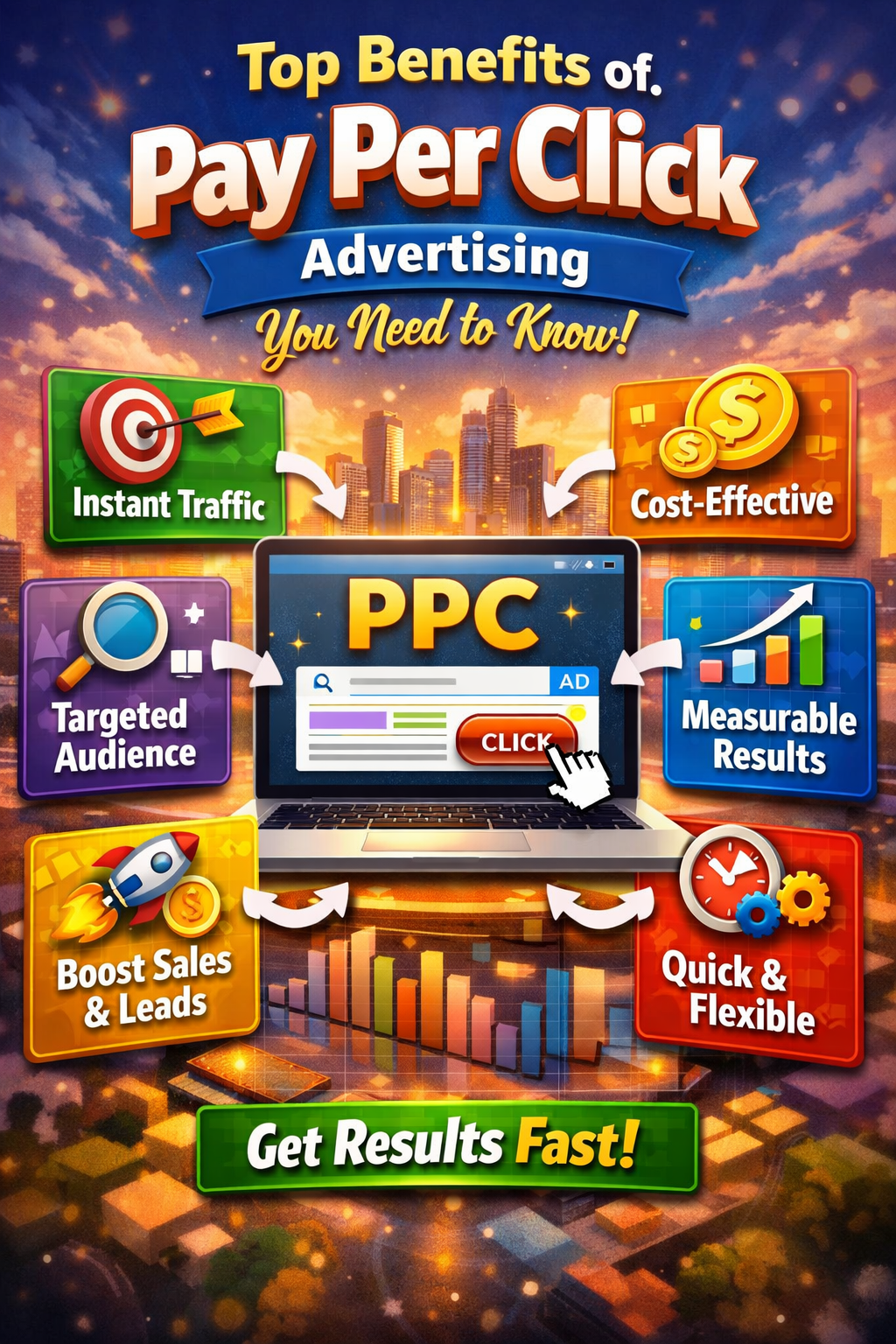
Outline: Top Benefits of Pay Per Click Advertising You Need to Know
Pay Per Click (PPC) advertising stands out in digital marketing for small businesses. It offers immediate exposure on search engines and online platforms, so brands can reach potential customers fast.
With cost-per-click pricing, you only pay for actual clicks to your website. This makes ad spend management simple and budget-friendly for any business size.
Advertisers gain access to advanced audience targeting like age, location, interests, devices, and timing. Campaign management tools help create user personas and segment audiences for more precise messaging.
Conversion tracking and performance metrics show clear data on return on investment (ROI), click-through rates (CTR), and conversion rate. You can run several campaigns at once or adjust them quickly using insights from real-time analytics.
PPC ads boost visibility, drive higher web traffic, fit different markets globally with ease, and support other digital marketing strategies like SEO efforts without high upfront costs.
https://www.youtube.com/watch?v=OW4GboFryzk
Introduction
Many business owners struggle to get noticed online, even after spending money on ads. One fact is that pay per click advertising is cost-effective and brings fast results for small businesses.
This blog will explain the top benefits of pay per click advertising, such as instant visibility, audience targeting, ROI measurement, and budget control. Find out how PPC can help your business grow today.
Key Takeaways
• Pay Per Click (PPC) advertising offers instant visibility on search engines and online platforms, letting businesses reach potential customers fast.
• Advertisers only pay for real clicks to their website, making PPC a cost-effective choice for small businesses with any budget size.
• Advanced targeting options allow companies to focus ads on specific demographics, locations, devices, interests, and timing for better engagement.
• PPC provides clear tracking and analytics so business owners can measure ad performance using metrics like click-through rate (CTR), conversion rate, and return on investment (ROI).
• Flexible budgeting lets advertisers adjust campaign spend easily based on results, helping maximize ROI while keeping costs under control.
Briefly introduce pay per click (PPC) advertising and its increasing importance in today’s digital marketing landscape.
Pay-per-click (PPC) advertising has gained traction as a key tool in digital marketing. This method allows businesses to display ads on search engines and various online platforms.
With PPC, advertisers pay only for actual clicks. This makes it cost-effective, especially for small business owners and entrepreneurs.
The importance of PPC advertising continues to grow. It offers immediate visibility and measurable results, helping businesses attract potential customers quickly. Users who click on these ads show genuine interest in the products or services offered, increasing conversion rates significantly.
As more businesses recognize its benefits, they turn to PPC to enhance their online presence effectively. Next, let’s explore how PPC campaigns deliver instant visibility and fast outcomes.
Instant Visibility and Fast Results
PPC advertising offers immediate visibility on search engines and social platforms. Businesses can attract potential customers quickly, resulting in fast results. This approach lets companies see returns on investment almost instantly.
With PPC, advertisers only pay for actual clicks, making it a cost-effective strategy.
Users already interested in the product self-select by clicking on ads. This interest increases the chances of conversion rates and enhances overall engagement. Small business owners can run multiple campaigns simultaneously to refine their messaging.
Flexibility allows adjustments based on performance metrics, ensuring effective budget management as well.
https://www.youtube.com/watch?v=-GuaADkztuE
Explain how PPC campaigns deliver immediate exposure on search engines and platforms, allowing businesses to quickly attract potential customers and see prompt results.
PPC campaigns quickly place ads at the top of search engine results. Businesses gain instant visibility and can attract potential customers right away. Users who click on these ads already show interest in the products or services, leading to higher conversion rates.
With PPC advertising, companies see measurable results without a huge budget commitment.
These campaigns are easy to launch and adjust based on performance metrics. Business owners can refine messaging and target specific audiences effectively. Flexible targeting options allow for reaching different demographics and locations seamlessly.
This strategy accelerates online engagement, setting the stage for deeper audience interaction through precise targeting and adaptability in future campaigns.
https://www.youtube.com/watch?v=Ncygd24ycKg
Precise Targeting and Flexibility
Advanced targeting options empower PPC advertising. Small businesses can hone in on specific audience demographics, locations, and devices. This flexibility allows companies to connect with users interested in their products or services.
Businesses can tailor messaging based on interests and timing to enhance engagement.
PPC advertising also supports multiple campaigns simultaneously. Marketers can refine their messaging as they gather data and insights from performance metrics. With proper budget management, adjusting strategies becomes easy and effective.
Increased brand visibility drives higher website traffic, making precise targeting a vital aspect of success in digital marketing efforts. Now let’s explore how PPC is cost-effective and manageable for all businesses.
Discuss the advanced targeting options available with PPC—including audience demographics, locations, devices, interests, and timing—enabling businesses to reach the right users with tailored messaging.
PPC advertising offers precise targeting options that help businesses connect with the right audience. You can focus on specific demographics like age, gender, and income level to reach potential customers effectively.
Location targeting allows you to show ads only in certain areas, maximizing your relevance based on where users live or work.
Device targeting lets you choose whether your ads appear on desktops, tablets, or mobile devices. This option ensures your messaging fits how people access information. Interests also play a big role; reaching users who actively seek products similar to yours boosts engagement rates.
Timing controls let you deliver messages at optimal moments when users are most likely to convert. These advanced tactics enhance campaign management by ensuring every dollar spent brings measurable results and maximizes ROI for small business owners and entrepreneurs.
Cost-Effective and Controlled Spending
Small businesses can thrive with PPC advertising. This approach allows advertisers to set their own budgets and control spending effectively. You pay only for actual clicks, making it a low-cost option for online advertising.
Adjustments based on performance are easy, ensuring your budget works harder.
Running multiple campaigns becomes feasible without breaking the bank. These targeted ads increase brand visibility and attract higher website traffic efficiently. With detailed tracking, you can measure ROI accurately and refine your strategies as needed.
CostPerClick offers flexibility while maximizing results; small businesses find this appealing in competitive markets.
Detail how PPC allows advertisers to set their own budgets, only pay for actual clicks, and easily adjust spending based on performance, making it accessible and scalable for businesses of all sizes.
PPC advertising gives businesses control over their ad budgets. Advertisers can set daily and monthly limits, ensuring they never overspend. They only pay for actual clicks on their ads, making costs manageable.
This cost-effective model helps even small businesses compete with larger companies.
Adjusting ad spending is simple based on performance metrics. If a campaign performs well, advertisers can increase the budget to boost visibility further. Conversely, they can reduce spending if results decline.
This flexibility makes PPC accessible and scalable for all types of businesses, allowing them to optimize campaigns efficiently while achieving a strong ROI.
Measurable Performance and Actionable Insights
PPC advertising offers high levels of measurability. You can track ad performance with ease. Powerful analytics provide clear data on ROI and user behavior. Small business owners can quickly identify which campaigns work best for them.
This insight allows you to refine your strategies effectively.
Businesses gain visibility into click-through rates (CTR) and conversion rates effortlessly. Understanding these metrics helps you make data-driven decisions about budget management and audience targeting.
Actionable insights lead to higher website traffic and increased engagement from interested users, allowing for better results over time.
Highlight the robust tracking and analytics of PPC, which provide clear data on ad performance, ROI, and user behavior—helping businesses refine campaigns and maximize results.
PPC offers clear tracking and analytics. These tools provide detailed data on ad performance, click-through rates, and conversion rates. Small business owners can see which ads perform best and adjust strategies accordingly.
This ability to measure results allows for data-driven decisions that enhance return on investment (ROI).
Analytics also reveal user behavior patterns. Advertisers can learn what attracts their audience’s interest and tailor campaigns to meet those needs. By running multiple campaigns simultaneously, businesses refine their messaging for better engagement and higher website traffic.
With PPC, every dollar spent leads directly to measurable outcomes that help small businesses grow effectively.
FAQs
- What is pay per click advertising and how does it fit into digital marketing?
Pay per click, or PPC, is a form of online advertising where you pay only when someone clicks your ad. It plays a key role in digital marketing by driving targeted traffic through search engine marketing. - How does PPC help with ROI and budget management?
PPC allows for clear ROI measurement since you can track each dollar spent against conversions. Budget management tools let you set spending limits to control costs. - Why is audience segmentation important in PPC campaigns?
Audience segmentation enables targeted advertising by showing ads to specific groups based on interests or behavior. This improves the chances of higher conversion rates and better campaign performance. - How do keywords impact the effectiveness of a PPC strategy?
Selecting precise keywords ensures your ads appear when potential customers search relevant terms, boosting clickthrough rate (CTR) and overall campaign success. - What are the main performance metrics used in managing a PPC campaign?
Key metrics include cost per click (CPC), conversion tracking, CTR, and return on investment (ROI). Monitoring these helps optimize campaign management for stronger results in online advertising.