


Struggling to figure out why your Google Ads seem too expensive or not performing? Quality Score Basics can hold the answer, as it rates how relevant and useful your keywords, ads, and landing pages are on a scale from 1 to 10. 2 This blog will break down the link between click-through rate, ad relevance, landing page experience, and how they connect with real ad performance. 1 Find out what goes into Google’s calculation so you can level up your PPC campaigns… keep reading!
Key Takeaways
- Google Quality Score rates your keywords, ads, and landing pages from 1 to 10 based on relevance and user experience.
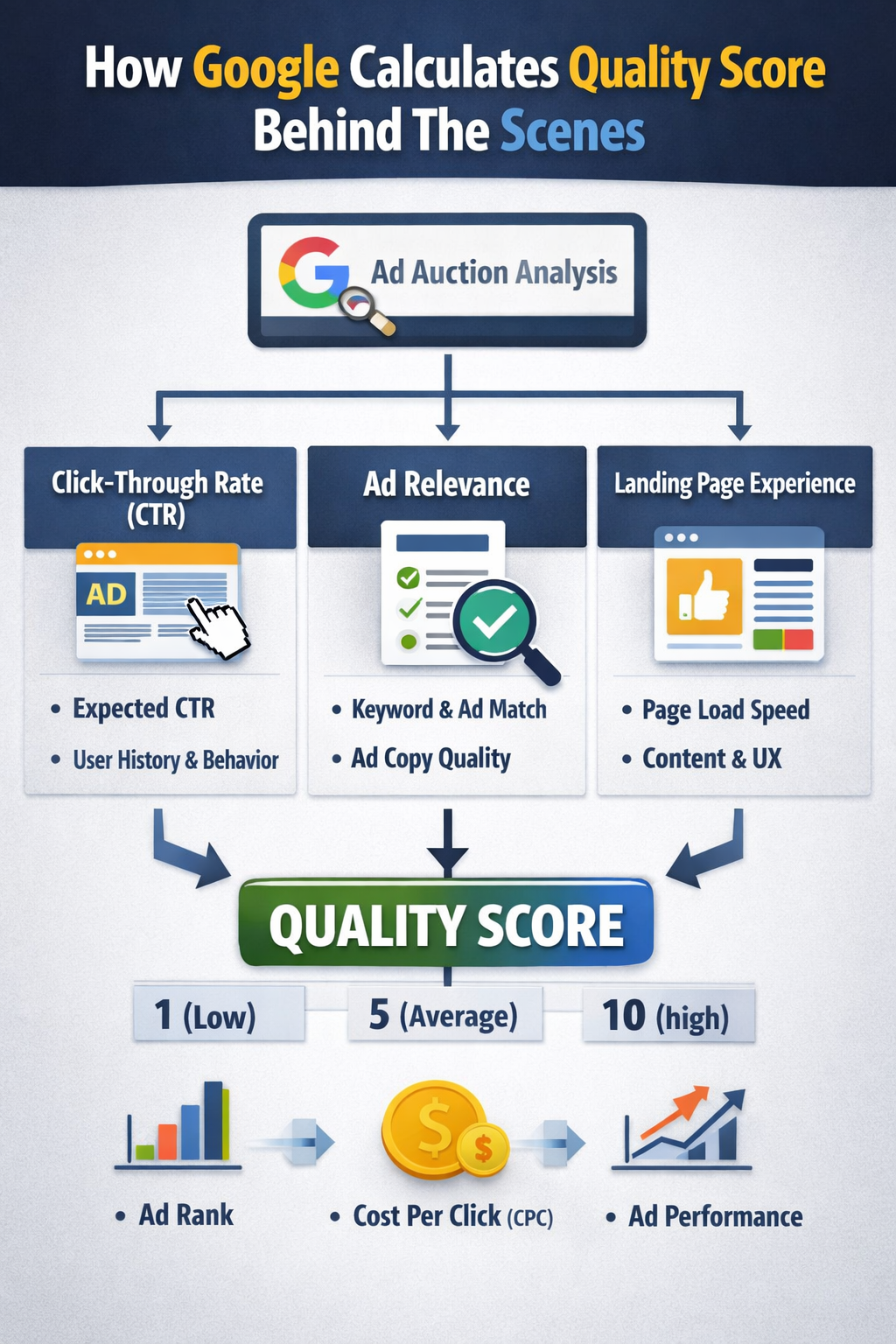
- The score depends on expected click-through rate (CTR), ad relevance, and landing page quality. A higher CTR often means a better score.
- Real-time auction analysis uses automated algorithms to check these factors for every search. Historical performance data also affects the score.
- Higher Quality Scores lower cost-per-click (CPC). For example, a Quality Score of 10/10 can cut CPC in half compared to a 5/10 score.
- Improving ad copy, using strong keywords, and creating fast-loading landing pages raise your Quality Score and help you reach business goals.
What Is Quality Score?
Quality Score is a rating in Google Ads that shows how relevant your keywords are to your ads and landing pages. This score runs from 1—very poor quality—to 10, which signals excellent alignment between ad copy, keyword targeting, and user experience on the landing page.
Google uses this number as a key part of its Ad Rank formula to decide where ads appear in search results and how much you pay per click (CPC).
A strong Quality Score reflects high expected click-through rate (CTR), good ad relevance, and positive landing page experience. Platforms like Microsoft Ads also measure quality this way.
Your visible Quality Score changes as account history builds up or as conversions improve through better landing page optimization or more focused keyword strategy. Use it as a diagnostic tool to compare your digital marketing efforts with other advertisers using Yahoo!, Bing, Facebook Ads, Reddit Ads, and LinkedIn Ads for lead generation or B2B SaaS marketing.
Key Components of Quality Score
Understanding the key parts of quality score shapes every strong ppc campaign. Google Ads uses critical factors like keyword relevance, ad copy, and landing page experience to judge your ads—powerful levers that can push your results higher.
Expected Click-Through Rate (CTR)
Expected Click-Through Rate (CTR) measures how likely users are to click on your ad. Google uses historical data to predict this likelihood. Ads with a high CTR often have better Quality Scores.
This leads to lower costs and higher ranks in search results.
Tracking CTR helps PPC specialists refine their keyword strategy. It shows which ads engage users the most. Higher CTR means more clicks, leading to better conversion rates. A good landing page experience also boosts expected CTR and, in turn, Quality Score.
Focus on creating compelling ad copy that resonates with your target audience; this will improve performance.
“High-performing ads lead to greater success in PPC campaigns.”
Ad Relevance
Ad Relevance is a key factor in Google Ads. It measures how well your keywords match your ad copy and the user’s search intent. Higher Ad Relevance leads to a better Quality Score.
This, in turn, can lower your cost-per-click (CPC) and boost ad rank. 2
To improve Ad Relevance, focus on using relevant keywords in your ad copy. Your ads need to align with what users are searching for. Relevant content makes it easier for users to find what they want.
Tools like Semrush can help identify these important keywords. 1 Also, competitor analysis can provide insight into crafting ads that resonate better with your target audience.
Landing Page Experience
Ad relevance connects to landing page experience. This part of Google’s Quality Score is essential for your ads. A good landing page helps keep users satisfied after they click your ad.
Google looks at several things. First, it checks the speed of the page and how fast it loads. Slow pages lead to high bounce rates, which is bad news for you. Next, content alignment matters; your landing page should match what people expect from the ad.
Include targeted keywords like “Used Surfboard” right on your page. Lastly, original content makes a big difference in user engagement and satisfaction.
A quality landing page also affects cost-per-click (CPC) and ad rank in PPC campaigns. The better the experience users have, the more likely they are to convert into customers. Focus on optimizing these elements for higher conversion rates and return on ad spend (ROAS).
How Google Calculates Quality Score
Google uses several methods to calculate Quality Score. It looks at past performance data from ads and keywords. This includes how often users clicked on your ads, called the click-through rate (CTR).
Google also analyzes each ad auction in real time. Automated systems assess different factors like keyword relevance and ad extensions during this process. The goal is to create a better user experience and improve ad rank.
Understanding these calculations can boost your PPC campaigns. Explore more to see how you can enhance your strategies!
Historical Performance Data
Historical performance data plays a key role in calculating Quality Score for Google Ads. This data includes past click-through rates (CTR) of your ads and keywords. If your ad had a high CTR before, it is likely to perform well again.
The system rewards you for good historical performance. This indicates that users are clicking on your ads more often than others.
Ads should link to landing pages with strong CTR histories. A solid history can improve the quality score over time. It also affects how much you pay per click (CPC). Higher scores can lead to lower CPCs, which is great for PPC campaigns aiming for higher returns on ad spend (ROAS).
Monitoring this data helps advertisers optimize their keyword strategies and enhance ad performance effectively.
Real-Time Auction Analysis
Google uses real-time auction analysis to assess ads during each auction. This happens every time multiple ads target the same keyword. Ads that are likely to get clicks are prioritized.
Factors like expected click-through rate (CTR), ad relevance, and user experience play key roles here.
The system analyzes historical data while considering current trends in user behavior. It makes decisions on the spot, driving both ad placement and cost per click (CPC). Understanding this process helps PPC specialists optimize their campaigns for better performance and higher conversion rates.
Keeping tabs on how quality score changes can lead to smarter keyword strategies and more effective ad copy too.
Automated Algorithms
Real-time auction analysis leads us to automated algorithms. These systems play a big role in how Quality Score is determined. Automated algorithms check many factors like expected click-through rate (CTR), ad relevance, and landing page experience.
They do this quickly and efficiently.
As new data from campaigns comes in, these algorithms adjust the Quality Score automatically. This means that your ad performance can change based on real-time insights. Google uses secret formulas to weigh each part of the Quality Score.
By understanding these processes, PPC specialists and media buyers can refine their keyword strategy for better results in their campaigns.
Why Quality Score Matters for Advertisers
Quality Score is vital for advertisers. A higher Quality Score leads to better ad positions and lower cost-per-click (CPC). For example, an average Quality Score of 5/10 means a CPC of $10.
If your score rises to 10/10, the CPC could drop to just $5. This change can make your pay-per-click (PPC) campaigns more profitable.
A strong Quality Score also impacts lead quality and customer acquisition. Higher scores often mean lower costs per conversion, which boosts revenue growth. Regularly monitoring your Quality Score helps maximize return on ad spend (ROAS).
Good practices like optimizing landing page experience and improving ad relevance will raise your score over time. Focus on these areas for a successful advertising strategy that meets business goals.
Conclusion
Google’s method for calculating Quality Score is crucial for advertisers. Accurate data helps determine how well your ads perform. Factors like expected click-through rate, ad relevance, and landing page experience all play a role.
Improving these areas can lead to better ad positions and lower costs per click. Focus on optimizing keywords and crafting engaging ad copy to enhance your campaigns effectively.
FAQs
1. What is Google Ads Quality Score and why does it matter?
Google Ads Quality Score measures how relevant your keywords, ad copy, and landing page experience are for users. A high score can lower your cost per click (CPC) and boost ad rank in PPC campaigns.
2. How does Google determine my Quality Score behind the scenes?
Google reviews several factors like ad relevance to search intent, expected click-through rate (CTR), keyword targeting, landing page optimization, historical data from your account, and conversion tracking to calculate this score.
3. Which parts of my ads influence the Quality Score most?
Ad copy quality, keyword relevance to user queries on the Google Search Network, use of ad extensions such as sitelinks or callouts, and strong landing page experience all impact your auction quality score.
4. Can improving my landing pages help raise my Quality Score?
Yes; a well-optimized landing page that matches your target audience’s needs improves user experience and conversion rate. This leads to better scores in both revenue per impression metrics and overall ad performance.
5. Does organizing my account affect how Google rates me?
Account organization matters; grouping related keywords into focused ad groups allows more precise keyword strategy execution. This helps marketing teams test ads efficiently with tools like Adalysis or directive consulting advice for higher ROAS.
6. How do I track progress toward a better Quality Score over time?
Monitor key signals such as CTR trends, changes in CPCs after testing new ads or adjusting keyword strategies, improvements in conversion rates from optimized copywriting or videos by experts like Silvio Perez; these steps show if you’re moving closer to top-tier results on Google Ads platforms including Adwords.